
Digging into Anglo-Saxon Burials
Dark Anglo-Saxon burials set into a bright white chalky landscape ... will any treasures be found?

*Warning: Photographs of human remains are found in this post*
In 2019, there were plans for a new Royal Artillery Museum on Ministry of Defence land in the chalky grounds of the Salisbury plains. Covid, (as well as a few other things) put the museum build on hold, but due to the incredible archaeological potential and wellbeing work with veterans of my favourite Operation Nightingale, an excavation took place! An excavation that ended up in my story when people ask ‘what is your top find?’. Keep reading!
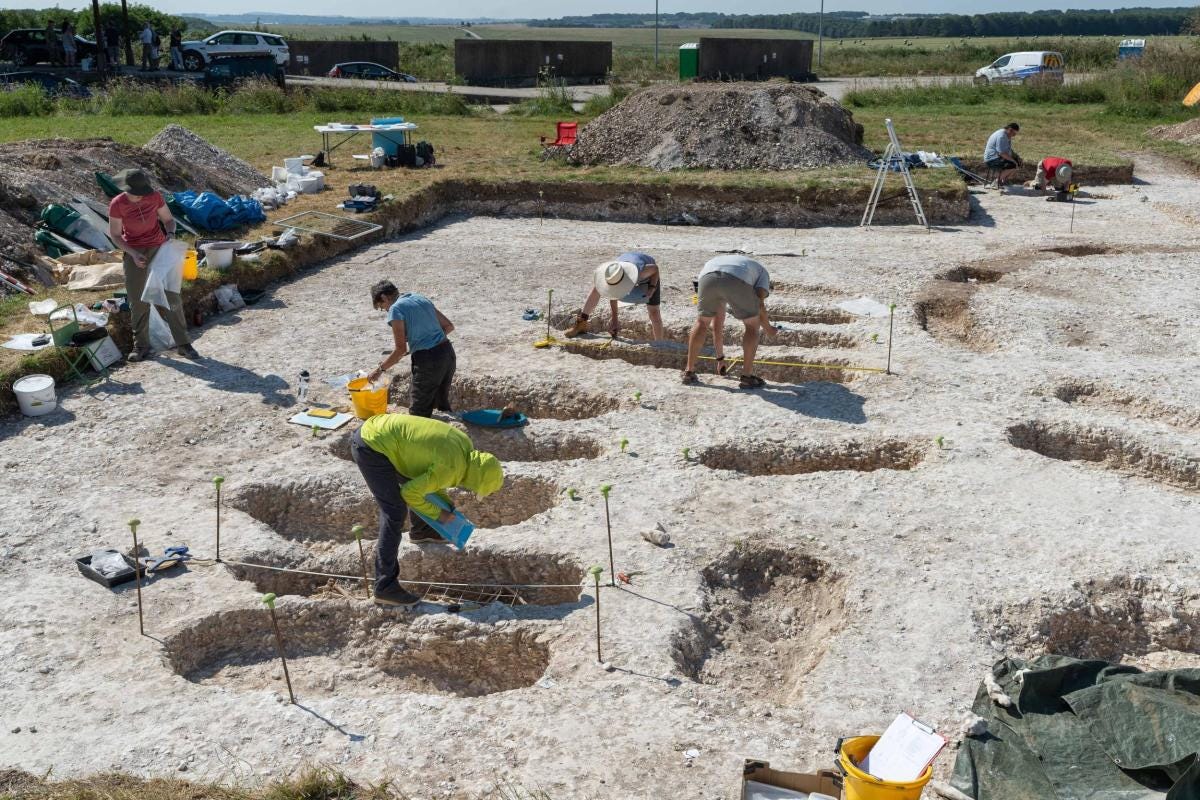
The Dig Site: The geophysics was a perfect imprint of what we found when we opened the site up, with a series of (later determined) 7th century Anglo-Saxon burials and a barrow/burial mound - something unusual for the Anglo-Saxon period. It was perched on a hill in the landscape, with a nearly 360 degree view. A perfect spot for a burial site of great importance.


Digging Deeper: 22 graves were present within the area that was opened. Edges of more graves were noticed along the boundary of the site, so the cemetery is even larger than what was exposed! Future excavations on the surrounding area will give more information to the total size of the cemetery, and therefore more information about the population that used to live in the area hundreds of years ago.
The graves were in rows, save the burial in the centre of the barrow, with individuals ranging in sex and age, from four years old to 70. There were also two large postholes near the edge of the barrow, possibly for standing large posts to add to the ceremonial landscape.
As it was an Operation Nightingale dig, I was surrounded by veterans, working with the lovely ‘B’ as seen in the large green cap below. This was the first time she was digging a skeleton, and it was really enjoyable to work alongside her and teach her to care for each brushstroke. It was also special to feel the joy of her successes and the pride of her accomplishment.
Every time I work with the vets I find myself more in awe of them.


Top Finds: These. Were. Incredible. And I was told that for Anglo-Saxon burials this was a ‘relatively empty’ site. Unbelievable!! Two burials had bone combs (made of cattle rib) set at the stomach of the individuals, likely kept in a small bag of treasured possessions when they were buried, with the bag since decomposed. There was a bone spindle whorl, something used for weaving, and jewellery.
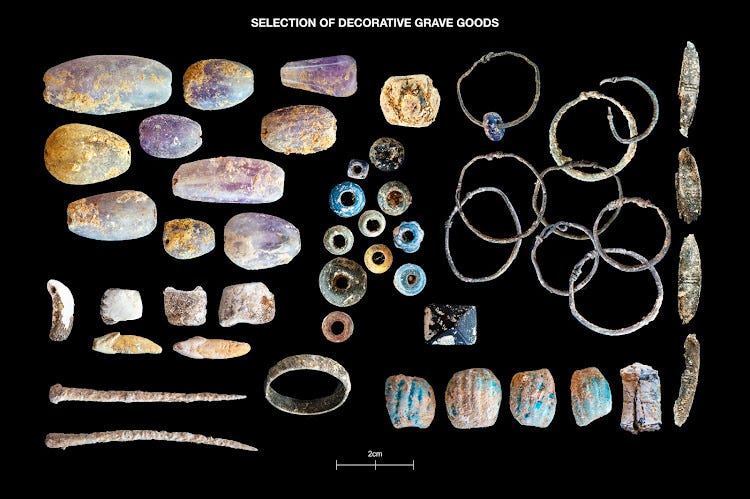
Let’s focus on the jewellery for a second because this is where I get to talk about one of my favourite finds of all time.
I was digging a burial of a woman, one of the graves lined up on the outside of the barrow. It was a hot day, I had a big hat on, and the sun was bouncing off the chalk earning me some new freckles. The woman was lying supine, on her back, arms next to her sides, and she didn’t have any grave goods. A lot of the other graves around me had a grave good each so I was getting quite jealous. It wasn’t until the last moment, when I was doing the final clean of the grave for a photo, when something glinted at me from around the neck. It was an amethyst bead. A bright purple bead, glinting in the sun…I couldn’t believe it! I could’ve made a big fuss and told people about it.. but I didn’t know exactly what I’d found yet, and I ended up having this quiet moment of excitement and anticipation just between me and this woman from hundreds of years ago. And as I’m brushing the dirt away, a little bit more, I start to find another bead, and a bit of a silver ring, and it ends up being a necklace. And I end up being face to face with this woman and I’m looking at her necklace that she was buried in.. it must have been so important to her and now I have this memory of finding this necklace and it’s so important to me. One of my favourite memories and genuinely, a life altering moment.

Dig Grub & Trowels Down: On the final Wednesday, we did a little bbq to celebrate the amazing work we did, the friendships made, and most importantly, to spend some time in the shade after the blazing sun started to get the best of us. I wish I’d taken a freckle face photo before and after because the difference was STARK.


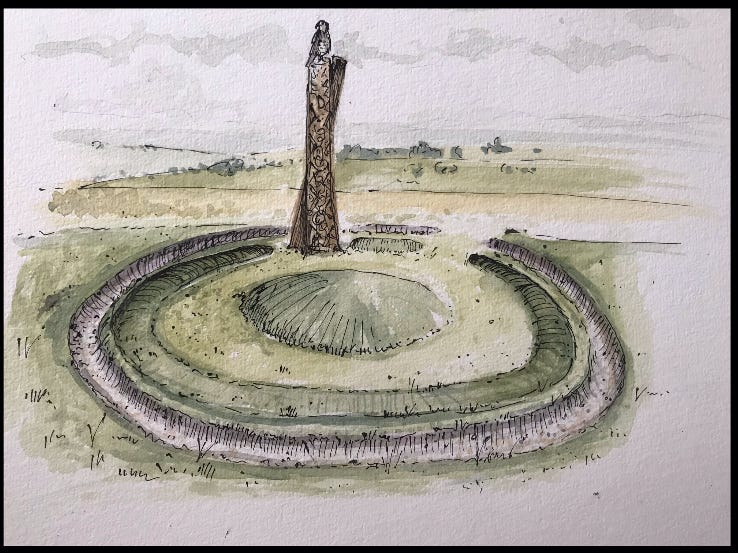
The dig lead, Richard, painted this stunning little recreation of what the site may have looked like during Anglo-Saxon times, barrow, big wooden posts, and beautiful plains beyond… What a special scene to imagine.
To learn more: Harvey Mills took the professional photographs in this post, and we are so lucky to have him be a part of Operation Nightingale digs because he depicts an archaeological site to its fullest - dirt, sweat, tears, and friendship. To find more of his photographs go to harveymills.com.